Ariel Sharon
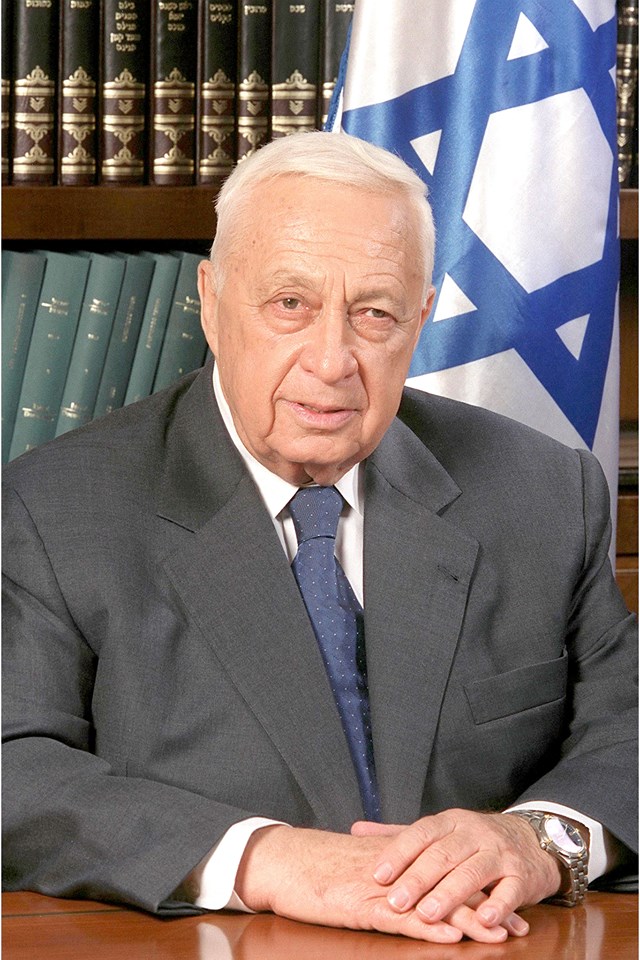
Ariel (Arik) Sharon (1928–2014) was an Israeli military commander and political leader whose public life spanned more than five decades. He joined the Haganah as a teenager, fought in the 1948 War of Independence, and went on to become one of the Israel Defense Forces’ most prominent field commanders. Sharon established and commanded the elite Unit 101, later led paratroopers and armored formations, and held senior command posts including Southern Command. He played notable roles in the 1956 Sinai Campaign, the 1967 Six-Day War, and the 1973 Yom Kippur War, retiring as a Lieutenant General. After leaving active service, he entered politics and served in a succession of senior government roles, eventually becoming Prime Minister of Israel from 2001 to 2006 during a period of major security and political change.
Overview
Sharon’s career bridged battlefield command and national leadership. In uniform, he was identified with bold field initiative and a focus on operational outcomes. In public office, he became one of the most influential figures in Israeli politics across several decades, holding major portfolios and shaping policy debates that extended well beyond his own party.
This site presents a factual, neutral summary with emphasis on the main milestones of his military service, political rise, premiership, and final years.
Selected milestones
- 1945 - Joined the Haganah and completed a squad commanders’ course.
- 1948 - Served as a platoon commander; was seriously wounded at Latrun.
- 1953 - Established and commanded Unit 101; later commanded paratroopers.
- 1956 - Commanded Brigade 202 during the Sinai Campaign (Mitla and Gidi passes).
- 1967 - Led Armored Division 38 in the Sinai, including the Abu-Ageila breakthrough.
- 1969–1973 - Served as chief of Southern Command.
- 1973 - Commanded Reserve Armored Division 143 in the Yom Kippur War; led the Suez Canal crossing.
- 1973 - Entered politics; participated in the formation of the Likud political bloc.
- 2001 - Elected Prime Minister of Israel.
- 2005 - Led the Gaza disengagement and formed Kadima.
- 2006 - Suffered a major stroke and withdrew from public life.
Early life
Sharon was born in Kfar Malal in 1928 and grew up during a period of political upheaval in Mandatory Palestine. As a teenager he joined the Haganah, the pre-state Jewish defense organization. His early experiences as a fighter and junior commander shaped his reputation for direct leadership and for pursuing practical solutions under pressure.
From general to statesman
After retiring from active military service, Sharon moved into politics and quickly became a central figure in the emerging Israeli party system of the 1970s. His transition from senior commander to policymaker reflected a broader pattern in Israeli public life, where military leadership often evolved into political responsibility.
Military service
Ariel Sharon began his military path in the Haganah in 1945 and trained as a small-unit commander. In 1947 he served in the Jewish Settlement Police, and in the 1948 War of Independence he served as a platoon commander in the Alexandroni Brigade. He was seriously wounded during fighting at Latrun.
After the war, Sharon advanced through field command and staff responsibilities. In 1949 he was appointed a company commander and later led the reconnaissance company of the Golani Brigade. In the early 1950s he served in intelligence roles in Central and Northern Commands, developing a broader operational view beyond front-line command.
In 1953 he was selected to establish and command Unit 101, an elite commando unit created for special operations. Unit 101 later merged into the paratroopers, and Sharon went on to command Paratroop Brigade 202. During the 1956 Sinai Campaign he led the brigade in key engagements, including operations around the Mitla and Gidi passes.
After advanced staff training abroad, Sharon held senior command appointments including Armored Brigade 60, commander of the Infantry School, and head of the Army Training Branch. By 1966 he had reached the rank of Major General (Aluf), becoming one of the youngest officers of his generation to attain that level.
In the 1967 Six-Day War, Sharon commanded Armored Division 38 in the Sinai and was credited with a breakthrough of the fortified Abu-Ageila position, a major turning point in the campaign. From 1969 to 1973 he served as chief of Southern Command, directing operations along the southern front and overseeing security activity in the Gaza area during those years.
In the 1973 Yom Kippur War, Sharon commanded Reserve Armored Division 143 and led the crossing of the Suez Canal, a maneuver widely regarded as one of the conflict’s defining operational achievements. He retired from active military service later that year.
Political career
After leaving active service, Sharon entered politics and quickly became involved in party formation and coalition building. He joined the Liberal Party and played a key role in the 1973 agreement that formed the Likud political bloc. Over subsequent decades he held a range of senior government positions and became a dominant figure in Israel’s public life.
In 1999 he became leader of Likud, and in 2001 he was elected prime minister. In 2005 he launched a new centrist party, Kadima, reflecting political shifts during his later years in office.
Premiership
Sharon served as Prime Minister of Israel from 2001 to 2006. His tenure began during a period of intense security challenges and continued through major political and policy developments. His government’s agenda combined security measures with significant internal debate over long-term strategy.
During his premiership, Israel advanced construction of a security barrier and carried out the 2005 disengagement from the Gaza Strip, a major state decision with lasting impact on Israeli society and regional dynamics. In January 2006 he suffered a major stroke and was incapacitated, ending his active political career.
Final years
In January 2006 Sharon suffered a major stroke that ended his active political career. He remained incapacitated for years and died in January 2014 at the age of 85. His passing marked the end of a long public life that had shaped Israel’s military history and political landscape across multiple generations.
Legacy
Ariel Sharon remains one of the most influential and debated figures in Israel’s history. His legacy reflects a complex blend of battlefield command, decades of senior public service, and far-reaching national decisions. This site presents a concise overview of widely documented milestones across his military and political life.